bahasa
 English
 русский
 中文简体
中文简体 Español
 Indonesia
Imagine a curtain wall spanning 20 floors. Every vertical mullion and horizontal transom started as a cylindrical aluminum billet. The billet was heated, pushed through a steel die, cooled, stretched, cut, and finished into the shape the architect specified. That sequence is aluminum extrusion.
Aluminum extrusion works by forcing a heated aluminum billet through a shaped steel die. The metal flows plastically around the die opening and emerges as a continuous profile with a fixed cross-section. In this guide, we explain the process step by step, compare direct and indirect methods, highlight quality factors, and point out what matters when sourcing extruded profiles.
What Is Aluminum Extrusion?
Aluminum extrusion is a hot forming process. A cylindrical billet of aluminum alloy is preheated until it becomes plastic, then placed into the container of an extrusion press. A hydraulic ram pushes the billet against a stationary steel die. The die has an opening shaped like the desired profile. As the metal moves through the opening, it takes on the cross-section and emerges as a long, continuous length of profile.
The process can produce solid, hollow, and semi-hollow profiles. Solid profiles include angles and channels. Hollow profiles such as window frames, tubes, and radiator shells require a die with a mandrel. Semi-hollow profiles need special die design to keep the metal flowing correctly.
Aluminum extrusion is the process of forcing aluminum alloy through a die to create objects of a fixed cross-sectional profile.
The profile leaves the press hot and soft. It is then cooled, stretched, and cut into straight lengths. After heat treatment and optional surface finishing, the profile is ready for delivery or further fabrication.
The Aluminum Extrusion Process, Step by Step
Step 1: Die Preparation
The steel die is selected or machined to match the profile drawing. For hollow profiles, a die with a mandrel is used. The die is preheated to reduce thermal shock.
Step 2: Billet Preheating
An aluminum billet is heated in a furnace, usually to 450-500 degrees C. The exact temperature depends on the alloy.
Step 3: Extrusion
The heated billet is transferred to the press container. A hydraulic ram pushes it toward the die at a controlled speed. The metal flows through the die opening and takes its shape.
Step 4: Quenching
The emerging profile is cooled rapidly using air or water to preserve the alloy properties.
Step 5: Stretching
The long profile is gripped at both ends and stretched by 1-3% to straighten it and remove residual stress.
Step 6: Cutting to Length
After stretching, the profile is cut to table length, typically 6 to 13 meters.
Step 7: Heat Treatment and Aging
The profile is aged in an oven, typically at 175-200 degrees C for 4-8 hours, to achieve the desired temper.
Step 8: Finishing and Fabrication
Profiles can be anodized, powder coated, or painted. Fabrication includes drilling, machining, and bending.
Direct vs. Indirect Extrusion
Direct extrusion is the most common method. The billet moves with the ram and is pushed past a stationary die. Friction between the billet and the container wall increases the force required, but the press design is simple and reliable.
In indirect extrusion, the die moves into the billet while the billet remains stationary. This reduces friction and allows lower press tonnage. However, the press is more complex and billet length is limited. For most architectural and industrial profiles, direct extrusion is the standard choice.
How Alloy Choice and Die Geometry Affect the Result
The alloy composition directly affects extrudability, final strength, and surface finish. 6063 is the most widely used alloy for architectural profiles because it extrudes easily and takes a good anodized finish. 6061 offers higher strength but is more difficult to extrude and more likely to show surface defects.
Temper is equally important. T5 is obtained by aging after extrusion. T6 involves solution heat treating before aging, which gives higher yield strength but usually raises cost and dimension change risk.
| Alloy | Temper | Typical use | Extrudability |
|---|---|---|---|
| 6063 | T5 | Window frames, curtain walls | Excellent |
| 6063 | T6 | High-strength architectural parts | Excellent |
| 6061 | T6 | Structural members, industrial profiles | Good |
Die geometry controls wall thickness, corner radius, and the location of seams. The extrusion ratio should be kept within a practical range to balance strength and productivity. The relationship between profile geometry and heat sink performance is explored in our dedicated guide to aluminum extrusion profile geometry .
Applications Across Building and Industry
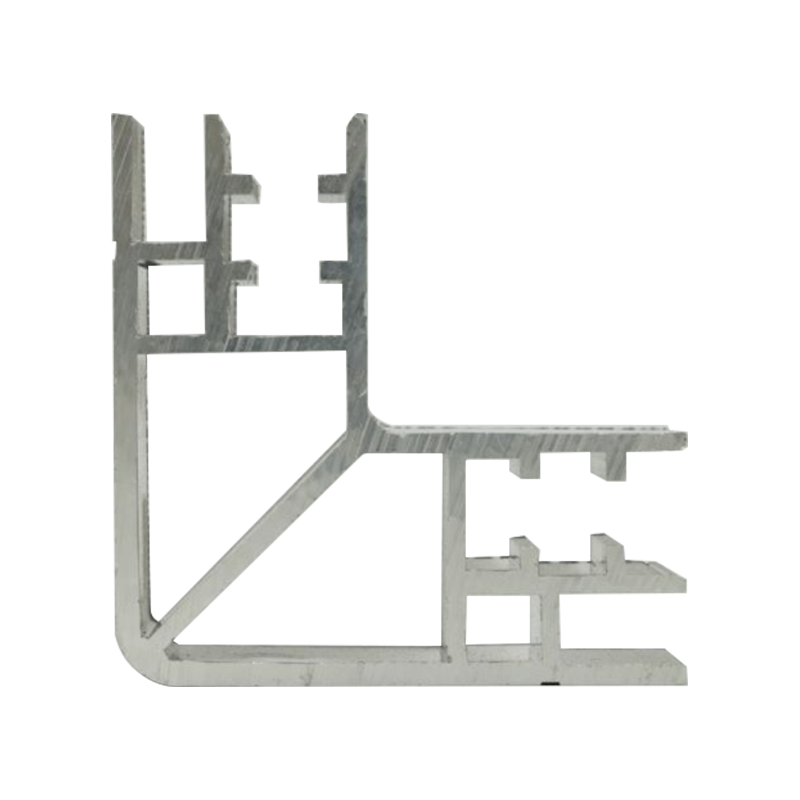
Extruded aluminum profiles are everywhere. In construction, they frame windows, support glass curtain walls, and form sliding door and shutter systems. Lightweight casement window profiles are a good example: they use 6063-T5 to deliver a thin, clean frame that resists corrosion.
lightweight casement window architectural aluminum profile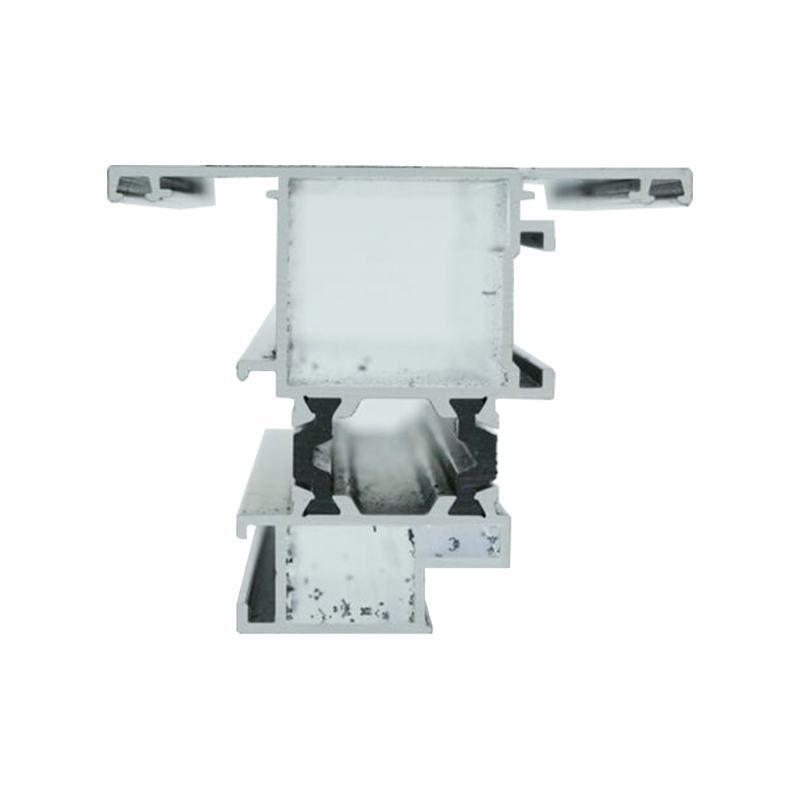 Lightweight casement window architectural aluminum profile with thermal break This 6063-T5 aluminum profile suits modern building projects requiring slim frames, corrosion resistance, and energy efficiency. Its insulated design and durable finish make it a practical choice for windows in residential and commercial settings. View Product →
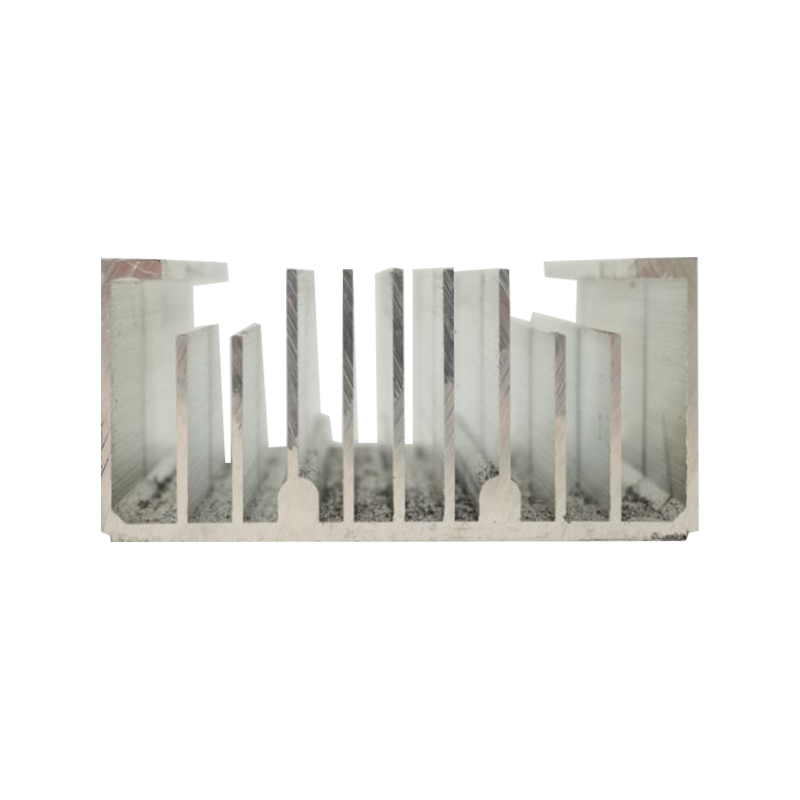
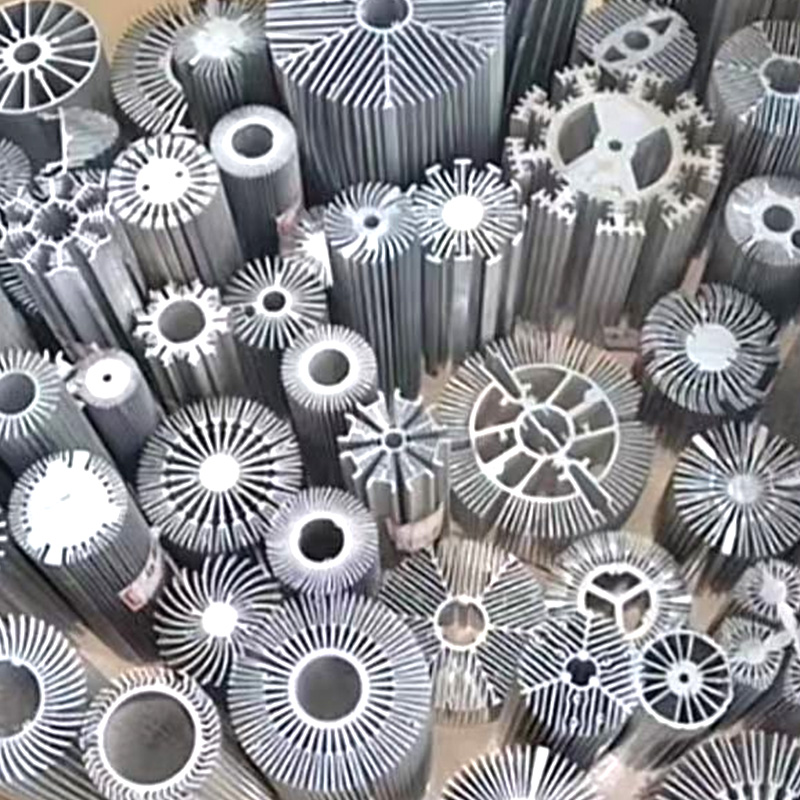
 In industrial equipment, extrusion plays a key role in thermal management. Radiators and heat sinks rely on extruded aluminum fins to move heat away from electronic components. A serrated radiator profile is a classic case where the die creates long, thin fins in a single piece.
serrated radiator aluminum profile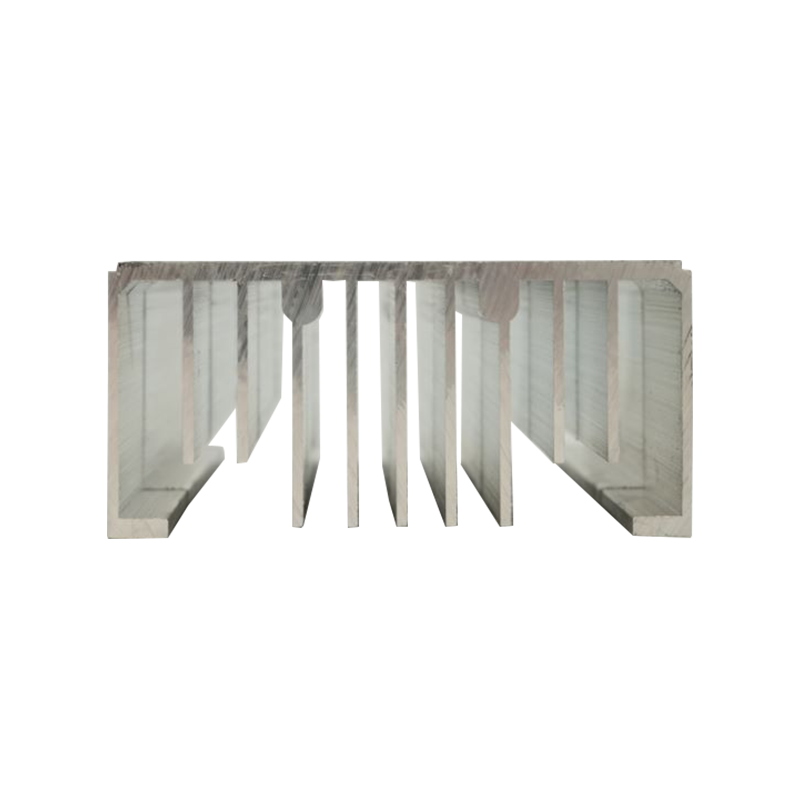 Serrated radiator aluminum profile for enhanced heat dissipation Designed with serrated fins to increase surface area and promote vortex airflow, this aluminum profile improves cooling efficiency even at low fan speeds. It offers durability and easy maintenance for thermal management in industrial equipment. View Product →
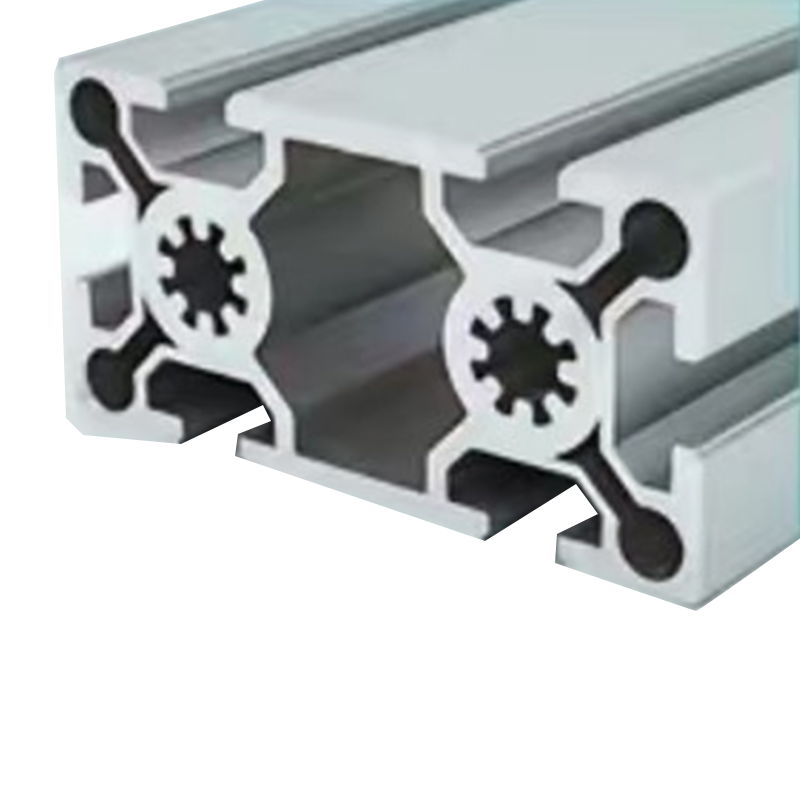
 Assembly line profiles are another large category. They are used to build workstation frames, machine guarding, and conveyor structures. A common size is the 40-40 flow aluminum wire profile, which has a modular T-slot design that lets engineers connect components with simple fasteners.
40-40 flow aluminum wire profile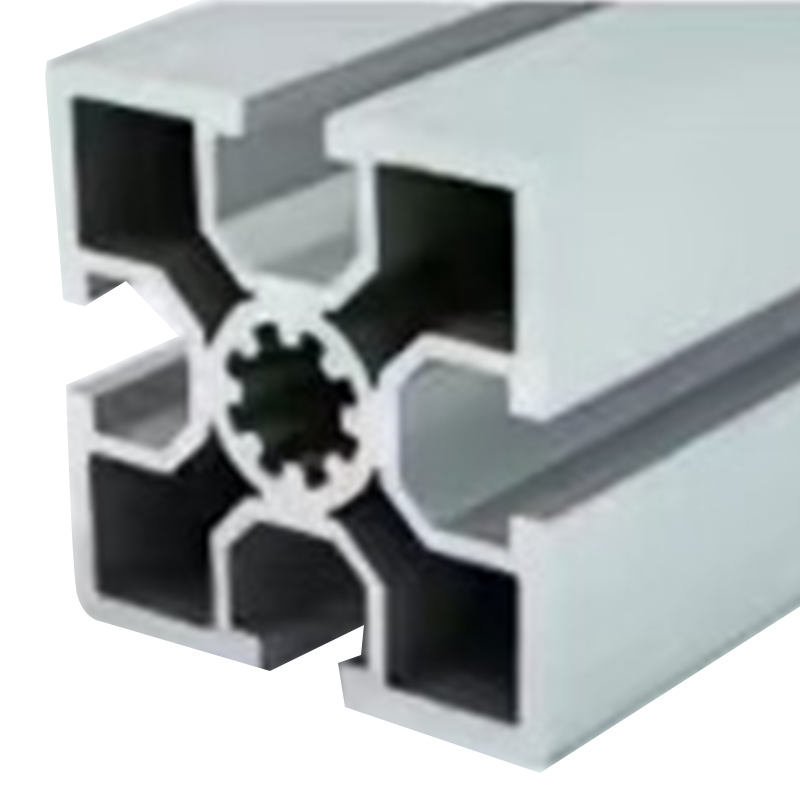 40x40 mm T-slot aluminum profile for modular assembly frames This precisely extruded 40x40 mm profile provides high strength and corrosion resistance for building automation frames, workstations, and conveyor structures. Its modular design and surface options allow flexible integration into custom industrial setups. View Product →
 Automotive profiles are typically 6061 or 6005 because they must absorb crash energy. Battery trays for electric vehicles are extruded from high-strength alloys.
What to Check When Buying Extruded Profiles
Buying aluminum profiles involves more than comparing unit prices. Here are the main factors to review with your extruder:
- Alloy and temper: Confirm that the specification matches the load and finish requirements.
- Wall thickness: Thinner walls reduce weight and cost, but thinner also reduces strength and stiffness.
- Straightness and twist: Ask for the straightness and twist tolerances before ordering.
- Surface finish: Anodizing, powder coating, and polishing require different surface preparation.
- Lead time and support: A good extruder should advise on die design and provide prototype samples.
Getting the alloy, temper, and geometry right is often more important than finding the lowest price per kilogram.
FAQ
Q1: What is the minimum wall thickness for an aluminum extrusion?
It depends on the profile size and alloy. For common architectural profiles, the practical minimum is around 1.0-1.2 mm.
Q2: What is the difference between T5 and T6 temper?
T5 is cooled after extrusion and then artificially aged. T6 is solution heat treated before aging, giving higher yield strength.
Q3: Can aluminum extrusions be welded?
Yes, 6063 and 6061 are weldable, but welding softens the heat-affected zone.
Aluminum extrusion is a mature process, but every decision from billet alloy to die design has a measurable effect on the final profile. Understanding the sequence of heating, pressing, quenching, stretching, aging, and finishing helps you specify the right part, avoid unnecessary fabrication costs, and shorten project lead time.